Environment Blog #2
Author: Ryan G
Created on: November 22, 2019
Us, humans are destroying the world everyday. However, it's not too late, our Earth has a fighting chance but can't succeed without us. What can/should we do? We can definitely start by stop throwing waste away such as plastic. Look at coral reefs, 2/3 of the Great Barrier Reef is destroyed. The crazy thing is after years of damaging our world, it can be still saved.
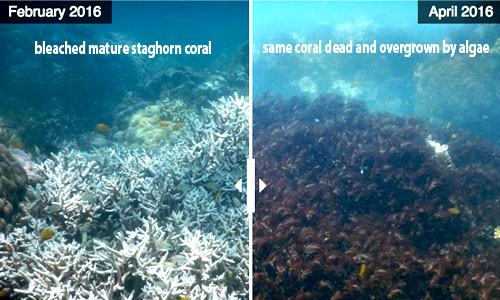
This picture above is the Great Barrier Reef, it shows how fast the reef can die once bleached.
Over time we've lost corals. It was fine because it wasn't that much. Now, in present day we are losing coral in coral reefs faster than ever. This is mainly occurring in the Pacific Ocean, or known as the largest ocean/body of water in the world. The North Great Barrier reef lost a total of 2/3 of it's coral, spanning over 100 miles. The coral became bleached or dead.
People thought "well now the damage is done, we can start to repair the coral reefs". Only to find out that would be the opposite thing we would do. This year we continued to bleach it further South where the coral was healthy. Now the Great Barrier Reef is 93% bleached.
The coral is fighting though. The coral has Polyps which are cells fighting to protect the coral, exacting like White Blood Cells. Like our White Blood Cells fighting off infection, the coral has to fight off algae. If the algae conquers the coral it becomes bleached and can die very soon as proven in the image above. We need to help Polyps, the way we can do that is slowly stop climate change and admitting waste into water.
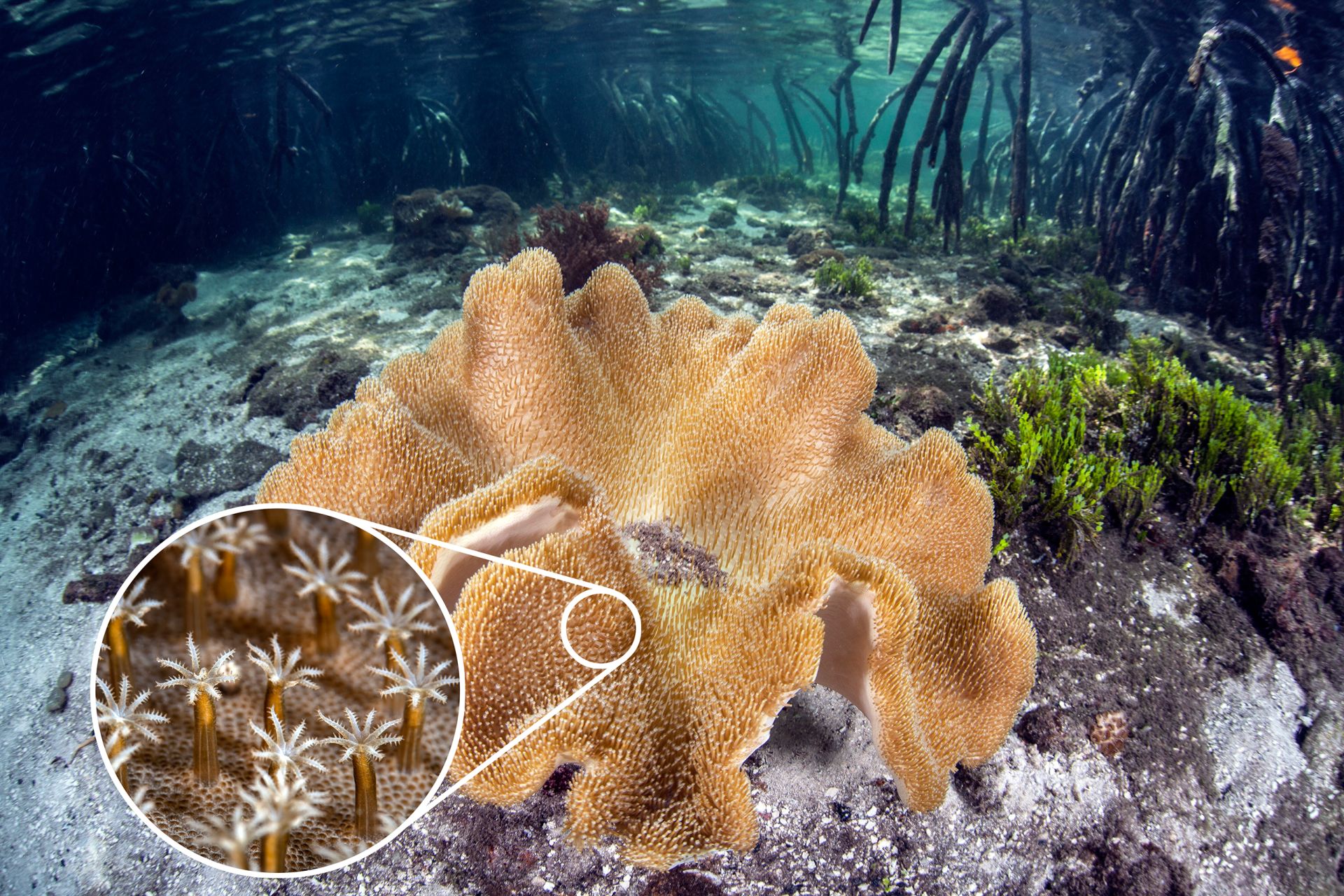
the image above is coral polyps
Climate change is a huge cause but it's not the only main cause, plastic waste is huge. Plastic waste when admitted into the Environment is deadly. That's due to plastic fragmenting. An example of plastic fragmenting is the Great Pacific Garbage Patch. This is the biggest garbage patch in the world caused by us humans. It is 1.6 million km squared. Let's give you an idea of how big that is, Texas is 695,662 km squared. That means the Great Pacific Garbage Patch is 2.3 times bigger than Texas.
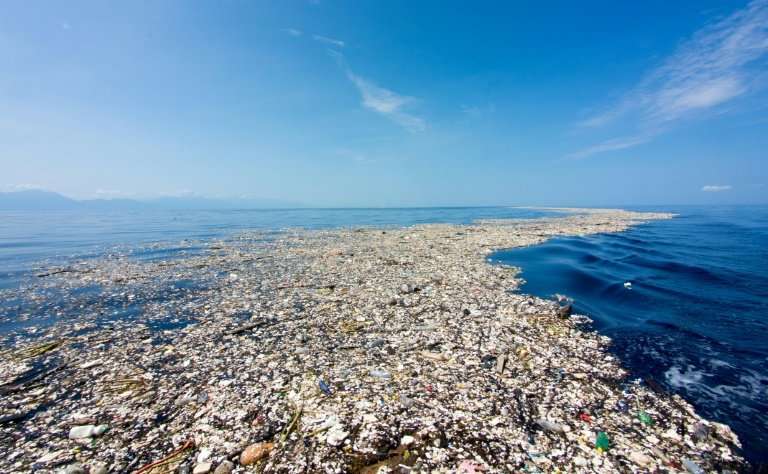
The image above is the Great Pacific Garbage Patch
NoPlasticWaste.org wants to launch a campaign to get rid of plastic waste and to prevent the spread of it from people. NoPlasticWaste.org wants to spend $300 million on a campaign made by the government. They would make a program to track waste and can identify who littered. Littering is really cut down by the law. Many people including me believe this program/campaign could end this after years of continuing this practice. What can we do in the meantime? Recycle, that's it. That's the little role you have to play to stop waste from fragmenting.
Citations
Created on: November 22, 2019
Us, humans are destroying the world everyday. However, it's not too late, our Earth has a fighting chance but can't succeed without us. What can/should we do? We can definitely start by stop throwing waste away such as plastic. Look at coral reefs, 2/3 of the Great Barrier Reef is destroyed. The crazy thing is after years of damaging our world, it can be still saved.
This picture above is the Great Barrier Reef, it shows how fast the reef can die once bleached.
Over time we've lost corals. It was fine because it wasn't that much. Now, in present day we are losing coral in coral reefs faster than ever. This is mainly occurring in the Pacific Ocean, or known as the largest ocean/body of water in the world. The North Great Barrier reef lost a total of 2/3 of it's coral, spanning over 100 miles. The coral became bleached or dead.
People thought "well now the damage is done, we can start to repair the coral reefs". Only to find out that would be the opposite thing we would do. This year we continued to bleach it further South where the coral was healthy. Now the Great Barrier Reef is 93% bleached.
The coral is fighting though. The coral has Polyps which are cells fighting to protect the coral, exacting like White Blood Cells. Like our White Blood Cells fighting off infection, the coral has to fight off algae. If the algae conquers the coral it becomes bleached and can die very soon as proven in the image above. We need to help Polyps, the way we can do that is slowly stop climate change and admitting waste into water.
the image above is coral polyps
Climate change is a huge cause but it's not the only main cause, plastic waste is huge. Plastic waste when admitted into the Environment is deadly. That's due to plastic fragmenting. An example of plastic fragmenting is the Great Pacific Garbage Patch. This is the biggest garbage patch in the world caused by us humans. It is 1.6 million km squared. Let's give you an idea of how big that is, Texas is 695,662 km squared. That means the Great Pacific Garbage Patch is 2.3 times bigger than Texas.
The image above is the Great Pacific Garbage Patch
NoPlasticWaste.org wants to launch a campaign to get rid of plastic waste and to prevent the spread of it from people. NoPlasticWaste.org wants to spend $300 million on a campaign made by the government. They would make a program to track waste and can identify who littered. Littering is really cut down by the law. Many people including me believe this program/campaign could end this after years of continuing this practice. What can we do in the meantime? Recycle, that's it. That's the little role you have to play to stop waste from fragmenting.
Citations
"A Radical Plan to End Plastic Waste." TED Talks, uploaded by Andrew Forrest,
Sept. 2019, www.ted.com/talks/
andrew_forrest_a_radical_plan_to_end_plastic_waste#t-647036.
Climate Nexus. "35% of Northern and Central Great Barrier Reef Is Dead and
Dying." EcoWatch, 31 May 2018, www.ecowatch.com/amp/
35-of-northern-and-central-great-barrier-reef-is-dead-or-dying-1891148011.html.
Accessed 22 Nov. 2019.
"The 'Dead Zone' of the Gulf of Mexico." TED Talks, uploaded by Nancy Rabalais,
2017, www.ted.com/talks/
nancy_rabalais_the_dead_zone_of_the_gulf_of_mexico#t-703456. Accessed 2019.
Loria, Kevin. "The Giant Garbage Vortex in the Pacific Ocean Is over Twice the
Size of Texas — Here's What It Looks like." Business Insider, 8 Sept.
2018, www.businessinsider.com/
great-pacific-garbage-patch-view-study-plastic-2018-3. Accessed 22 Nov.
2019.
"Why I Still Have Hope for Coral Reefs." TED Talks, uploaded by Kristen
Marhaver, 2017, www.ted.com/talks/
kristen_marhaver_why_i_still_have_hope_for_coral_reefs/discussion#t-145369.
Accessed 2019.


Good overview of a variety of issues facing oceans. What, specifically, is causing the bleaching of coral reefs? Is there any way to help the polyps fight the bleaching? Is anyone making any efforts to clean up the trash in the Great Pacific Garbage Patch?
ReplyDeletethe main ways to help polyps is to reduce problems like climate change, and disposing plastic into the water. If we can do that consistently for years, we can restore our coral reefs.
DeleteGoing off your section about the Great Pacific Garbage patch, what can we do as citizens to reduce the amount of trash inducted into the ocean. With that, is it possible to slowly clean up/remove this patch from the ocean? is this trash pile impacting other plants and animals as well as algae?
ReplyDeletePlants are being destroyed in their ecosystem do to waste fragmenting. We can reduce the amount of this by being smarter, like recycle and don't litter. Also fighting against climate change and not using anything that will benefit Co2 would help. Basically, start using renewable energy, recycle, use electric vehicles, and stop littering. We can save coral reefs but their life is decreasing fast as the Great Barrier Reef is almost fully dead and bleached but if we act now we can still save it.
DeleteIs there any way to rebuild the reef? Could you clean it and import new coral and let it spread?
ReplyDeleteyes, we have to keep it healthy and stop climate change because the increase of hot temperature through global warming is certainly affecting it. Individually you can switch over to renewable energy, recycle, use electric vehicles, and stop littering.
Delete